Mastering business growth logistics is the absolute most critical step every successful entrepreneur must take the moment their customer demand outpaces their current operational infrastructure. Historically, the immediate, knee-jerk reaction to scaling a company was to sign a massive commercial lease, hire a fleet of in-house administrative staff, and drastically increase your physical square footage. However, in today’s highly digitized, remote-first economy, tying up your vital working capital in a five-year commercial real estate contract is often a fatal misstep. If you want to remain agile, profitable, and highly competitive, you must completely rethink your business growth logistics. Scaling your brand is no longer about acquiring more physical desks and warehouse racks; it is about strategically decentralizing your entire operational footprint to maximize output while minimizing overhead.
For small to mid-sized businesses, particularly those operating in rapidly expanding economic hubs like Plano, Texas, the cost of commercial real estate can completely devour your profit margins. Expanding your physical office space means taking on increased property taxes, utility bills, commercial insurance, and heavy maintenance costs. Instead of feeding the real estate market, smart founders are leveraging advanced business growth logistics to scale their revenue while keeping their physical footprint virtually microscopic. By outsourcing non-core functions, virtualizing your mailroom, and partnering with dedicated local fulfillment centers, you can achieve enterprise-level operational capacity from a single laptop.
This comprehensive guide explores the exact frameworks and strategies required to scale your daily operations without expanding your physical office space. We will deconstruct the hidden traps of commercial leases, explore how on-demand commercial printing and third-party fulfillment can replace heavy industrial equipment, and show you exactly how to leverage local logistical hubs to build a highly resilient, effortlessly scalable corporate infrastructure driven by elite business growth logistics.
See Also — Custom Commercial Printing by Xpress:
- Full Color Menus – Durable and waterproof menu printing designed for local restaurants and cafes.
- Full Color Flyers – High-quality, vibrant promotional flyers engineered to capture attention and convert.
- Custom Booklets – Professional saddle-stitch and perfect bound booklet printing services.
Table of Contents
- •The Financial Trap of the Traditional Commercial Lease in Business Growth Logistics
- •Virtualizing Your Administrative Footprint
- •Outsourcing Fulfillment: The Core of E-commerce Business Growth Logistics
- •Leveraging On-Demand Commercial Printing for Business Growth Logistics
- •Automating Your Tech Stack for Scalable Business Growth Logistics
- •Tapping into External Shipping Networks
- •The Strategic Advantage of Local Hub Partnerships in Business Growth Logistics
The Financial Trap of the Traditional Commercial Lease in Business Growth Logistics
To truly appreciate the value of lean business growth logistics, you must first critically analyze the massive financial burden of physical expansion. When a company decides to lease a larger office or a new warehouse, they are fundamentally altering their risk profile. A commercial lease is a fixed, highly inflexible liability. Whether you sell ten thousand units this month or zero units, your rent is due. Whether you have twenty employees in the office or everyone is working remotely, the utilities must be paid.
This rigidity destroys agility. In the modern e-commerce and digital service landscape, markets fluctuate rapidly. A sudden viral marketing campaign might require you to quadruple your fulfillment capacity overnight, only for demand to stabilize back to normal levels three months later. If you expanded your physical warehouse to accommodate that temporary spike, you are now trapped paying for empty, unutilized space. This is the exact opposite of optimized business growth logistics, which relies on elastic, variable costs rather than static financial anchors.
By strictly refusing to expand your office space, you force your company to adopt a flexible cost structure. Instead of paying fixed rent for a massive warehouse, a proper business growth logistics strategy dictates that you partner with a third-party logistics provider where you only pay for the exact shelf space you use and the specific boxes you ship. If your sales dip in July, your logistics costs automatically drop with them. Protecting your cash flow from fixed real estate liabilities is the absolute first step in building a sustainable enterprise.
Virtualizing Your Administrative Footprint
One of the primary reasons businesses mistakenly believe they need more office space is administrative bloat. As your company grows, so does the sheer volume of physical mail, legal documents, state compliance notices, customer returns, and vendor invoices. In a traditional setup, handling this requires a dedicated mailroom, filing cabinets, and administrative staff sitting at physical desks—all of which violate the core principles of lean business growth logistics.
A masterclass in business growth logistics involves completely virtualizing this administrative footprint. Instead of leasing a suite in a commercial high-rise to handle your corporate correspondence, you can implement a Virtual Mailbox solution. Services like Anytime Mailbox or iPostal1 allow you to route all of your physical corporate mail to a secure, professionally managed commercial facility located right in Plano.
When mail arrives, trained technicians scan the exterior of the envelopes and instantly push digital notifications to your smartphone or laptop. From there, you can dictate exactly what happens next with a simple tap on your screen. You can request that the facility securely open and scan the contents of a letter, securely shred sensitive financial documents, or forward physical packages to a different destination. By virtualizing your mailroom, your business growth logistics instantly improve because you eliminate the need for administrative square footage.

Outsourcing Fulfillment: The Core of E-commerce Business Growth Logistics
If you run a product-based business, inventory is the absolute enemy of physical space. A growing e-commerce brand will rapidly find its living rooms, garages, and small office suites overflowing with cardboard boxes, bubble wrap, and pallets of raw goods. When the physical clutter begins to actively slow down your packing speed and introduce human error into your outbound shipments, it is time to deploy advanced business growth logistics.
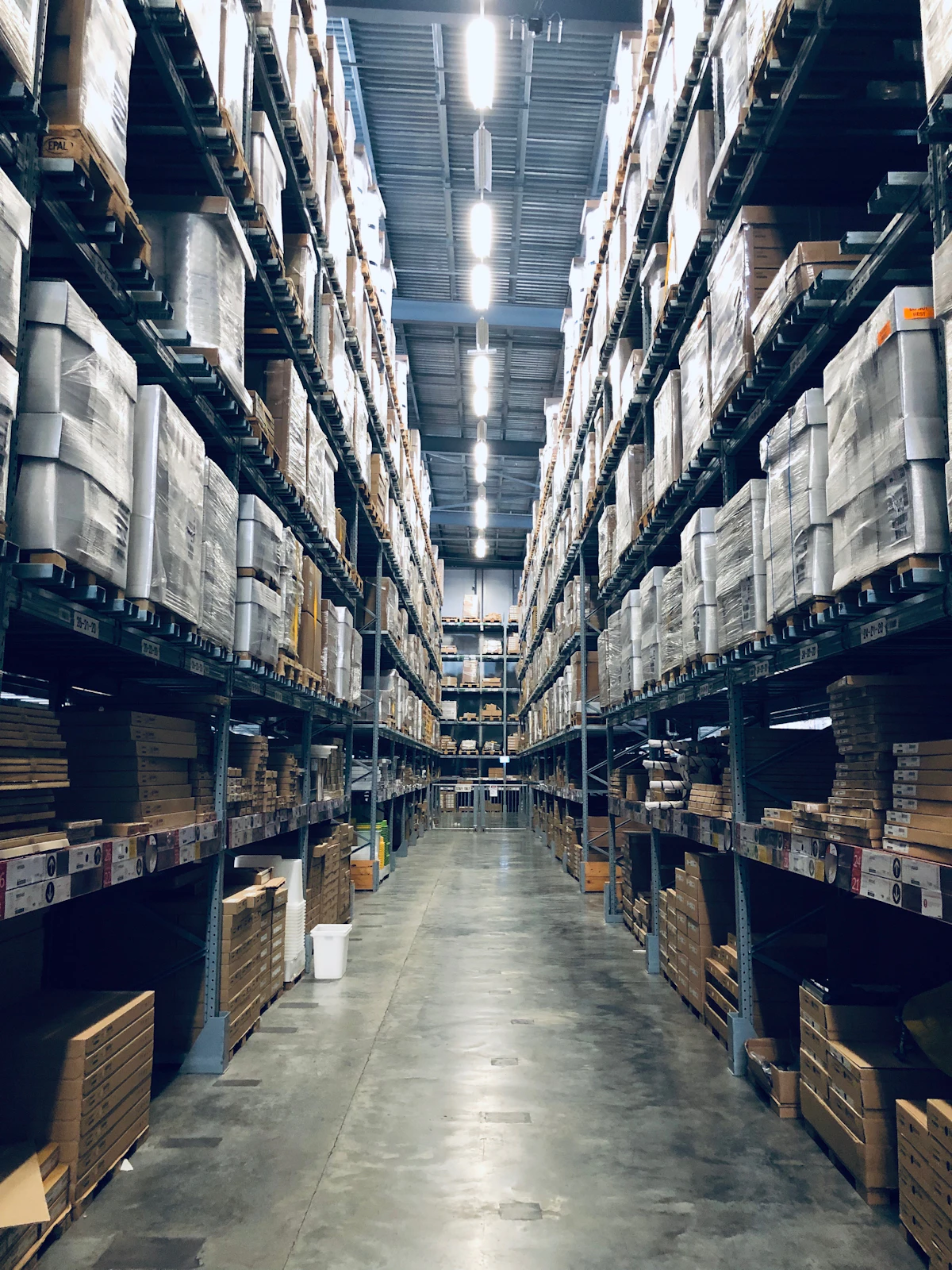
Outsourcing your order fulfillment to a local logistics hub is the most powerful way to scale operations without signing a warehouse lease. When you partner with a professional pack and ship facility, you instantly acquire enterprise-grade business growth logistics infrastructure. You are effectively renting their loading docks, their heavy-duty forklifts, their commercial thermal printers, and their highly trained warehouse staff for a fraction of what it would cost to build that infrastructure yourself.
This transition fundamentally changes how your business operates. Instead of your executive team wasting six hours a day taping boxes and driving to the post office, they can spend that time optimizing your digital ad spend, negotiating better rates with overseas manufacturers, and improving your website’s User Experience (UX). A robust business growth logistics strategy recognizes that your highest-value activity is brand building, not taping cardboard.
See Also — More Business Resources from Xpress Shipping:
- Full Color Business Cards – Leave a lasting impression with premium, heavyweight cardstock options.
- Architectural Blueprints – Crisp, large-format blueprint printing designed for contractors and architects.
- Xpress Shipping Blog – Read more expert guides on fulfillment, logistics, and local business SEO strategies.
Leveraging On-Demand Commercial Printing for Business Growth Logistics
Another massive consumer of physical office space is industrial equipment. Growing businesses often require high-volume marketing materials: promotional flyers, restaurant menus, corporate presentation booklets, and large-format architectural blueprints. The traditional mindset dictates that to scale these operations, you must purchase expensive, massive commercial printers, stockpile thousands of pounds of toner and specialized paper stock, and dedicate an entire room of your office to production.
This is a highly inefficient use of capital and square footage. A leaner approach to business growth logistics involves pivoting entirely to on-demand commercial printing. By partnering with a dedicated local print hub, you gain access to millions of dollars worth of cutting-edge printing technology without having to lease the space to house it or pay the technicians to maintain it.
When you need 5,000 full-color promotional flyers for an upcoming trade show, you simply upload your digital files to your local print partner. They handle the high-speed production, the precision cutting, and the quality assurance, delivering a pristine final product directly to your door. This on-demand model ensures you never run out of ink, never have to deal with paper jams, and never have to sacrifice valuable office real estate for heavy machinery—a major win for your overall business growth logistics.

Automating Your Tech Stack for Scalable Business Growth Logistics
Scaling without physical space requires you to aggressively substitute human labor with digital automation. If your business systems are deeply disjointed—meaning your e-commerce platform does not communicate with your accounting software, and your inventory system does not communicate with your shipping carriers—you will be forced to hire data entry clerks to manually bridge those gaps. More clerks require more desks, more monitors, and more physical office space.
Advanced business growth logistics relies on flawless API integrations and automated webhooks. Using platforms like Shopify, WooCommerce, ShipStation, and automation routing tools like Make.com, you can build a digital ecosystem that essentially runs itself. When a customer places an order, the software should automatically process the payment, instantly deduct the item from your digital inventory count, route a picking ticket directly to your outsourced fulfillment center, and email a tracking number back to the customer without a single human keystroke.
By automating the flow of data, you drastically reduce your need for administrative headcount. A company that utilizes high-level business growth logistics and automation can process 10,000 orders a month with the exact same physical office space and administrative staff required to process 1,000 orders. Technology is the ultimate space-saving multiplier in your operational strategy.
Tapping into External Shipping Networks
To truly execute a lean operational model, you must view major shipping carriers not just as delivery drivers, but as an extension of your own company’s infrastructure. You do not need to own a fleet of delivery vans to execute nationwide two-day shipping; you simply need to intelligently tap into existing global networks.
Mastering business growth logistics means intimately understanding how to leverage the resources provided by the U.S. Small Business Administration and major carriers. Utilizing programs like USPS Ground Advantage, FedEx Express, and integrated DHL international networks allows you to offer your customers world-class logistical performance without carrying any of the physical overhead. You are effectively renting their airplanes, their sorting facilities, and their thousands of delivery vehicles on a per-package basis. Maximizing your use of these external networks is critical to scaling your brand’s reach globally while maintaining a localized, minimal-footprint headquarters.
The Strategic Advantage of Local Hub Partnerships in Business Growth Logistics
Scaling a business successfully is an exercise in ruthless prioritization. Every square foot of space you lease, every printer you buy, and every hour your team spends packing a box is a resource stolen away from marketing, product development, and customer acquisition. The ultimate goal of business growth logistics is to strip away all operational friction so your brand can move faster than the competition without being bogged down by real estate constraints.
You do not need a bigger office to build a bigger business; you simply need smarter partnerships. By virtualizing your mailroom, automating your software stack, outsourcing your commercial printing, and shifting your physical inventory to a dedicated third-party pack and ship facility, you can build a highly resilient, enterprise-level corporation that operates entirely from the cloud.
If you are based in the DFW metroplex and are ready to stop letting physical space limitations choke your company’s growth, it is time to leverage local infrastructure and master your business growth logistics. Xpress Shipping and Printing in Plano, Texas, serves as the ultimate operational partner for scaling brands. From providing secure virtual business addresses and high-volume commercial printing to executing complex pack and ship fulfillment strategies, Xpress provides the physical muscle your business needs to grow infinitely without ever signing another commercial lease. Scale smarter, stay lean, and let professional business growth logistics drive your success.